About us
Mission and Goals
Board of Directors
Secretary General
Management
Membership
Core members
Corporate members
Affiliated members
Honorary Members
Membership Benefits
Companies
By Sectors
Join us
News
EUGBC News
Members News
Newsletter
Events
Past Events
Upcoming Events
DCFTA
Seminars
Working Group
EUGBC Catalogues
EUGBC Publications
EUGBC Leaflets
Press & Media
TV
Videos
Photo Gallery
Contact us
Events
EVENTS
Georgia-Belgium Business Roundtable
Annual Conference of the Black Sea Platform
Offers of the Banking Sector for the support of the sustainability of the SMEs
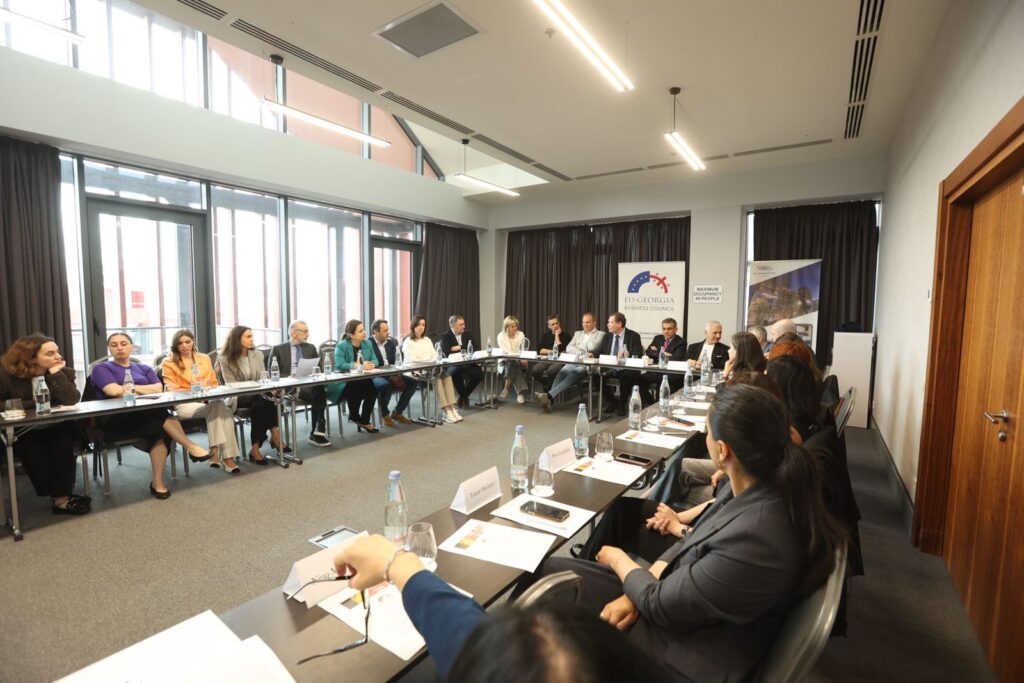
Meeting with the Austrian Ambassador to Georgia
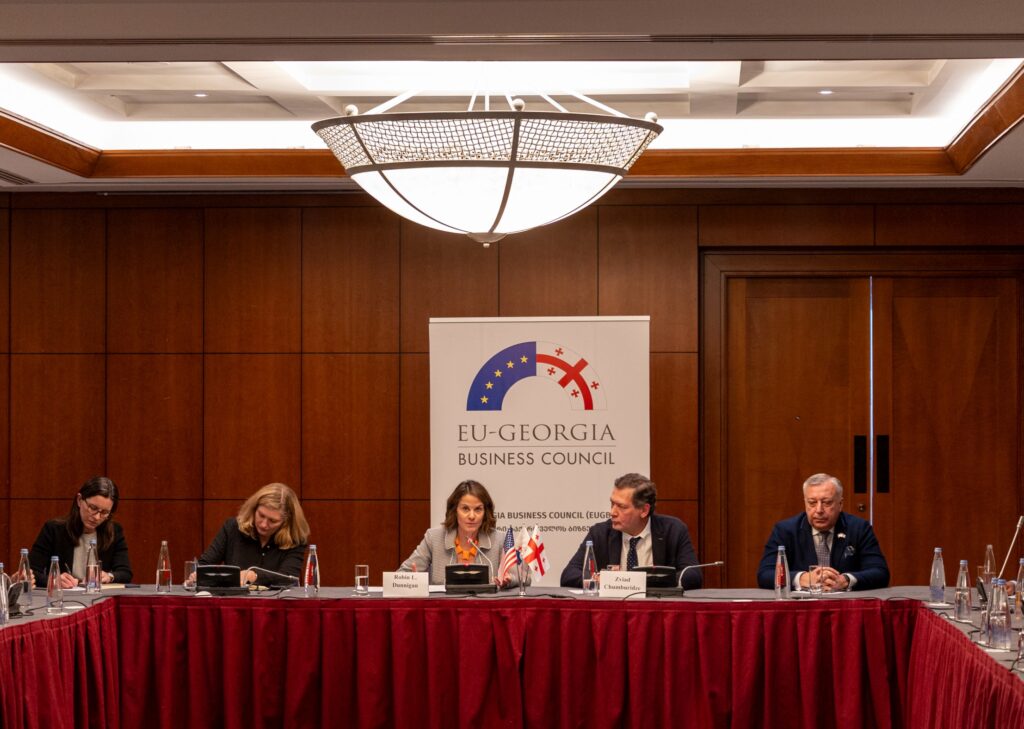
Meeting between the EUGBC members and the US Ambassador to Georgia
Visit of the Georgian Delegation to Germany
Meeting with the Ambassador of the Federal Republic of Germany to Georgia
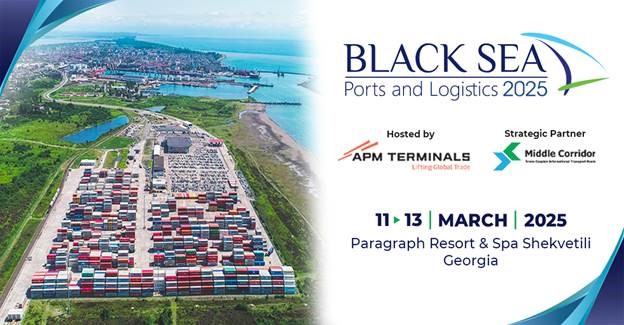
Role of International Financial Institutions in the Transport and Logistics Sector
GERMAN-GEORGIAN BUSINESS CONFERENCE & GEORGIAN WINE AND PRODUCTS EXPO, Tuesday, 23 April 2024, Berlin
Meeting with the Ambassador Extraordinary and Plenipotentiary of the Czech Republic to Georgia, H.E. Petr Kubernát
Joint statement of business associations regarding the EU candidate status
Cyprus-Georgia Business Forum in Nicosia
A two day seminar on the program of Authorized Economic Operators in Batumi
A two-day seminar on the status of authorized economic operator and customs formalities
Roundtable “EU Candidacy Status from Business Perspective”
Signing the joint statement
Launching of the EUGBC new initiative “THE BLACK SEA PLATFORM”
Georgia-Belgium Business Roundtable “Doing Business with Georgia”
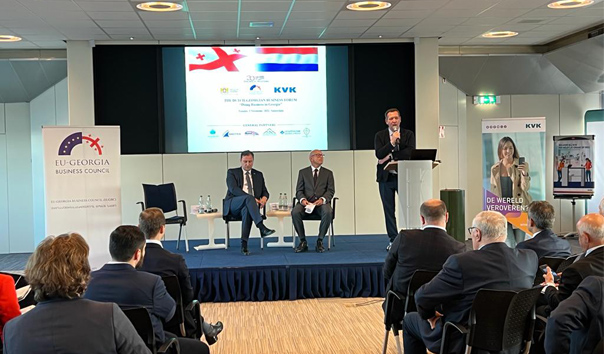
The Dutch-Georgian Business Forum “Doing Business with Georgia”
Azerbaijan-Georgia Business Forum????
A round table on “Employment Opportunities for Ukrainians in Georgia”
Round Table – Perspectives of cooperation with the new trade partners stemming from the current geopolitical situation
Business Round Table in Tbilisi
Conference “Black Sea – Georgia’s Opportunities and Challenges”
Georgia-Ukraine Business Round Table
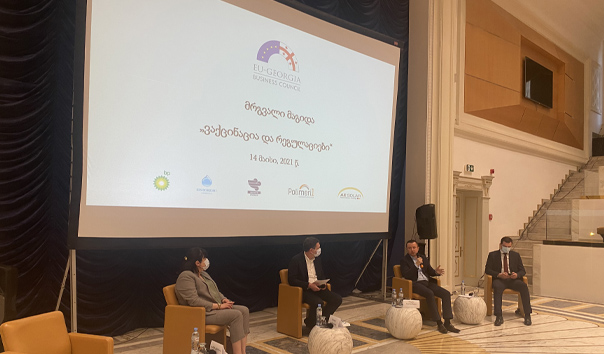
მრგვალი მაგიდა “ვაქცინაცია და რეგულაციები”
Round Table “Georgia’s Economic development perspectives and necessary reforms in 2020-2024”
Dialogue with Business
Georgia – Azerbaijan Business Forum
Conference “Black Sea- Georgia’s Opportunities & Challenges”
A reception on the occasion of the 10th Anniversary of Eastern Partnership
Regional Business Forum was held in Bratislava with the participation of Georgian Business Sector ?????
EUGBC organized the next in turn meeting between EU Commissioner for Trade, with Businesses
EUGBC Annual Members’ Meeting 2019
EUGBC organized first large scale meeting between Georgian Ambassadors and Business Sector
Polish-Georgian Business Forum in Warsaw
RENEWABLE ENERGY DEVELOPMENT – THE WAY FOR SECURING ENERGY INDEPENDENCE
Conference in Tbilisi “Business disputes and Court Practice”
Conference on prospects for development of economic cooperation between V4 countries and Georgia, held in Tbilisi
Visit of the Georgian Business Delegation to Hungary
EUGBC organized first Georgian-Finnish business forum
EUGBC organized Georgia-Austria business round table
V4 Countries’ Ambassadors meeting with business sector and presentation of EUGBC New Business Catalogue
Visit of the Georgian Business Delegation to Germany
Business Conference in Tbilisi “European Companies in Georgia – Growing Trade and Investments”
EU Commissioner For Trade Ms Cecilia Malmström held a meeting with EUGBC.
Presentation of new business catalogue, EUGBC BUSINESS LINE
EUGBC organized Georgia-Netherlands Business Forum
Meeting with Lloyd’s Register Quality Assurance (LRQA)
EUGBC site visit to PASHA Bank
EUGBC held Site Visit to Borjomi Bottling Plant № 1
EUGBC organized Site Visit to HeidelbergCement
EUGBC Site Visit to JSC “Mina”
Investor Council launched by the Government of Georgia and EBRD
Business Conference in Brussels “Georgia’s new opportunities in free trade with the EU”, visit of the Georgian Business Delegation to Belgium
EUGBC Meeting with Business Ombudsman of Georgia
EUGBC Board and Network Committee Meeting February, 2015
EUGBC organized regular Site Visit to TBC Bank Head office
EUGBC seminar on “Prospects of EU-Georgia Association Agreement/DCFTA” was held in Gori
EUGBC Members meeting with the State Minister of Georgia on European & Euro-Atlantic Integration
“Discussing tariff and non-tariff barriers in the trade with the EU”
Visit of the Georgian Business Delegation to the Slovak Republic
Visit of the Georgian Business Delegation to the Republic of Austria
EUGBC Seminar on “Prospects of EU-Georgia Association Agreement/DCFTA – was held in Sighnaghi, Kakheti Region
Signature of the Memorandum of Understanding between EUGBC and the Agricultural Cooperatives Development Agency (ACDA)
EUGBC held Site Visits at the industrial sites of Bagrationi 1882 and Sarajishvili
EUGBC organized a Seminar in Batumi on the “Prospects of EU-Georgia Association Agreement/DCFTA – with the support of the EU Delegation
Meeting with Experts Council
Austrian-Georgian Business Forum was held in Tbilisi, Georgia
EUGBC Celebrated the Signing of the EU-Georgia Association Agreement
EUGBC Expo & Economic Photo Exhibition
EUGBC Annual Members Meeting
EUGBC Board Meeting June 2014
Business lunch with Georgian Ambassador to EU, Natalie Sabanadze and Statoil Vice President, Anders Marvik
EUGBC and Georgian Delegation Held Meeting with Philippe Cuisson
Meeting of EUGBC and Georgian business delegation with financial institutions in Brussels
Meeting of EUGBC and Georgian delegation with Brussels based businesses
Meeting with H.E. Hans P.P.M. Horbach, Ambassador Extraordinary and Plenipotentiary of the Kingdom of the Netherlands
EUGBC meeting with EU’s Chief Negotiator on DCFTA with Georgia, Philippe Cuisson
The EUGBC Secretary General meets Greek Ambassador Eleftherios Proios
Deputy Foreign Minister held a meeting at EUGBC Tbilisi Office
EUGBC reception on the occasion of opening Tbilisi Office
EUGBC reception on the occasion of opening Tbilisi Office
EUGBC Tbilisi office hosted DCFTA Working Group Meeting
Meeting of EUGBC Network Committee was held at EUGBC Office in Tbilisi
Tbilisi-based EUGBC Board Members and Network Committee Members held an informal meeting in EUGBC new office
The members of EUGBC met with the new Ambassador of Georgia to Belgium and Luxemburg and Head of Georgian Mission to the EU and the French Ambassador in Georgia at Annual Members’ Meeting in Tbilisi
EUGBC organized Members’ meeting with Ambassador Philip DIMITROV, Head of the Delegation of the European Union to Georgia
Trade Mission from Belgium and the Netherlands to Georgia on December 10-12
EUGBC organised the meeting of business community with Gunnar Wiegand, high official of European External Action Service, Chief Negotiator on Association Agreement with Georgia
Members of EUGBC Working Group on DCFTA held a meeting with the Chief Negotiator on DCFTA from Georgia
Members of EUGBC Working Group on DCFTA held a meeting at the EU Delegation in Georgia
The Chairman of EUGBC Board and EUGBC Secretary General met with the Deputy Head of Mission of the British Embassy in Georgia
The Chairman of EUGBC Board and EUGBC Secretary General met with the Commercial Director of Georgian Oil and Gas Corporation (GOGC)
Annual Members’ Meeting of EUGBC was held in Tbilisi
New Chairman of the EUGBC Board and EUGBC Secretary General met with the Head of EU Delegation to Georgia Ambassador and Head of Division for EaP countries at the EEAS
EUGBC organized first meeting of the DCFTA WG in Tbilisi
Load more